
Kuba Textile Structured Handbag I MPENZII X-
PRODUCT DESCRIPTION
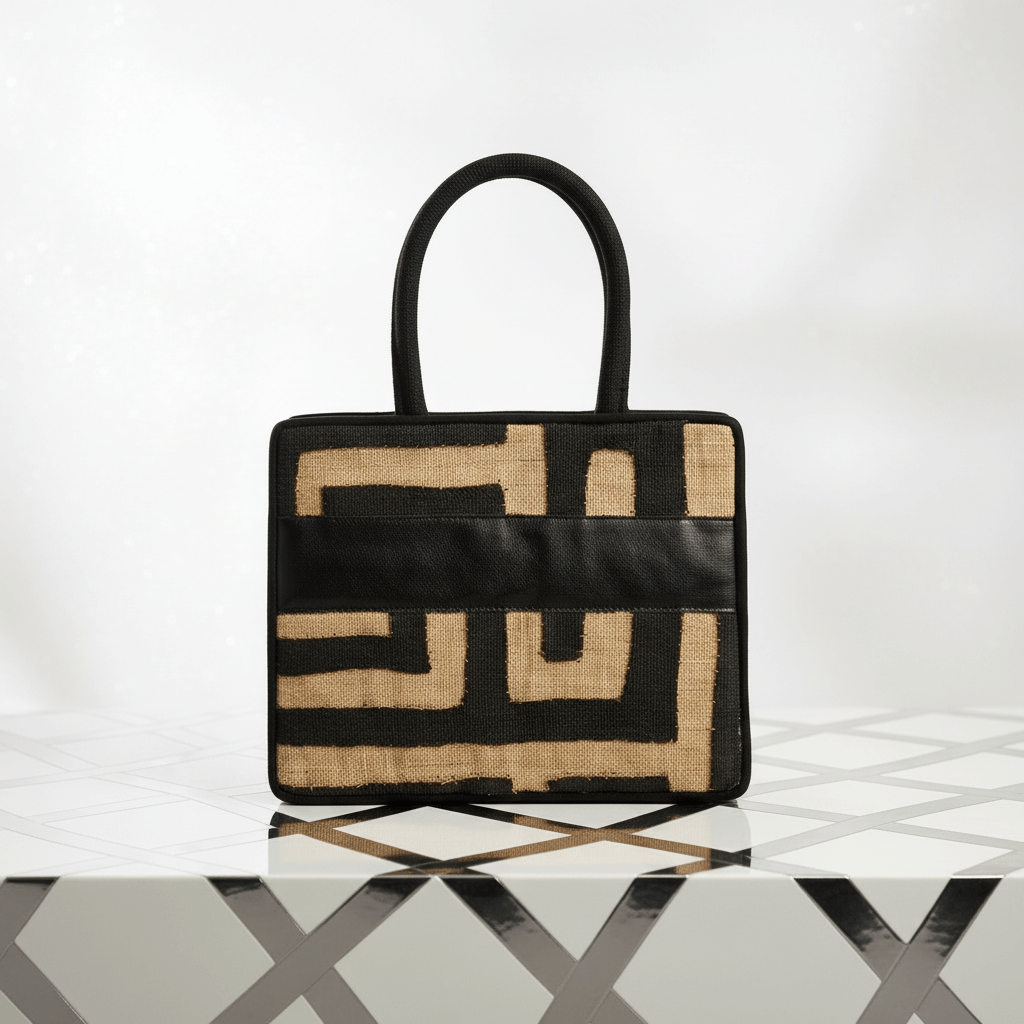
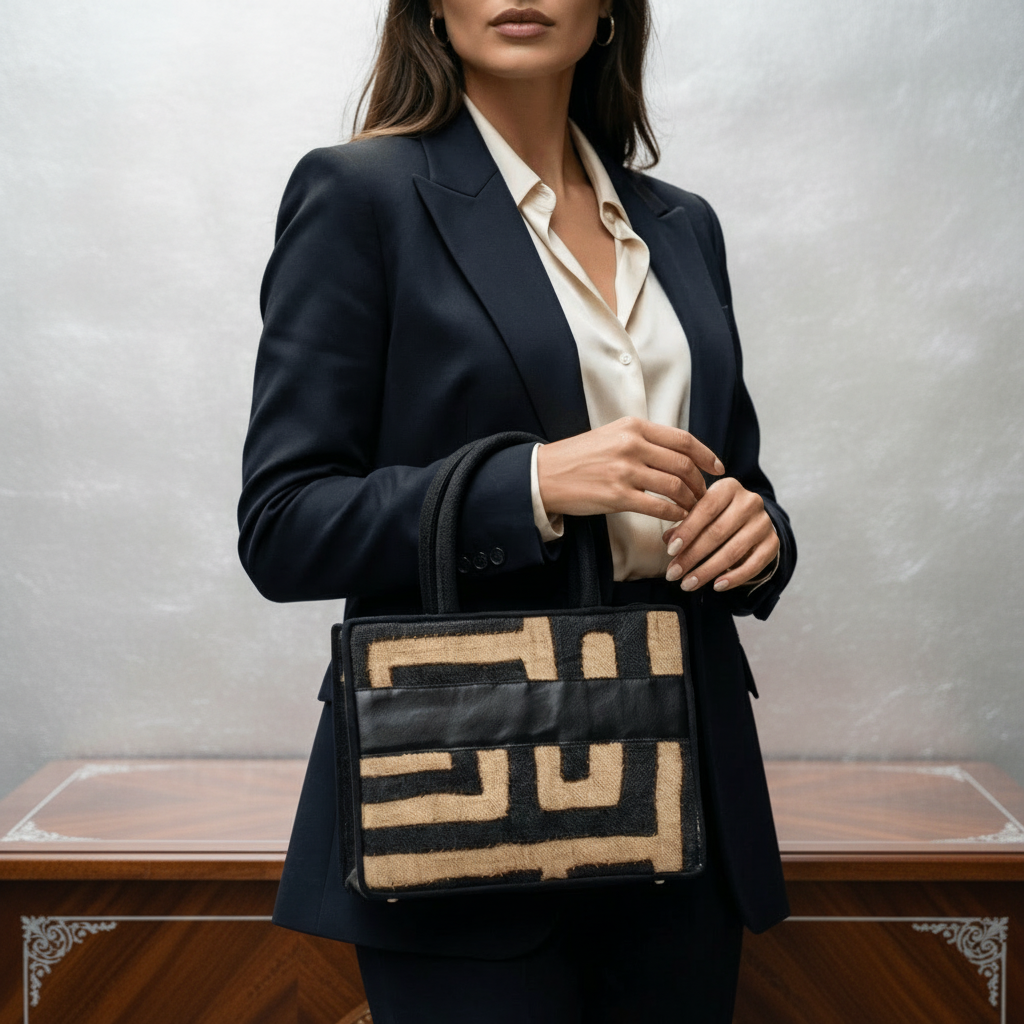
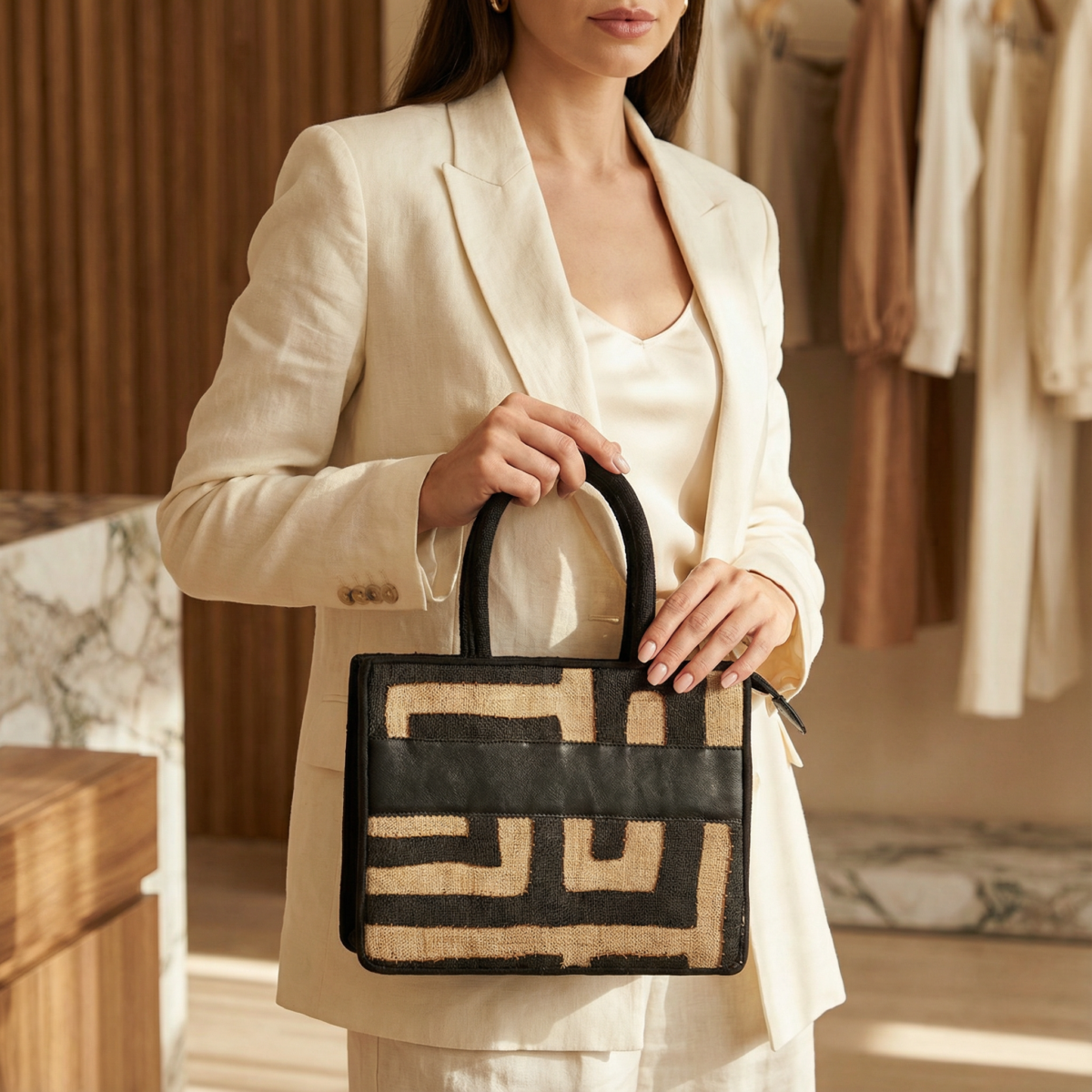
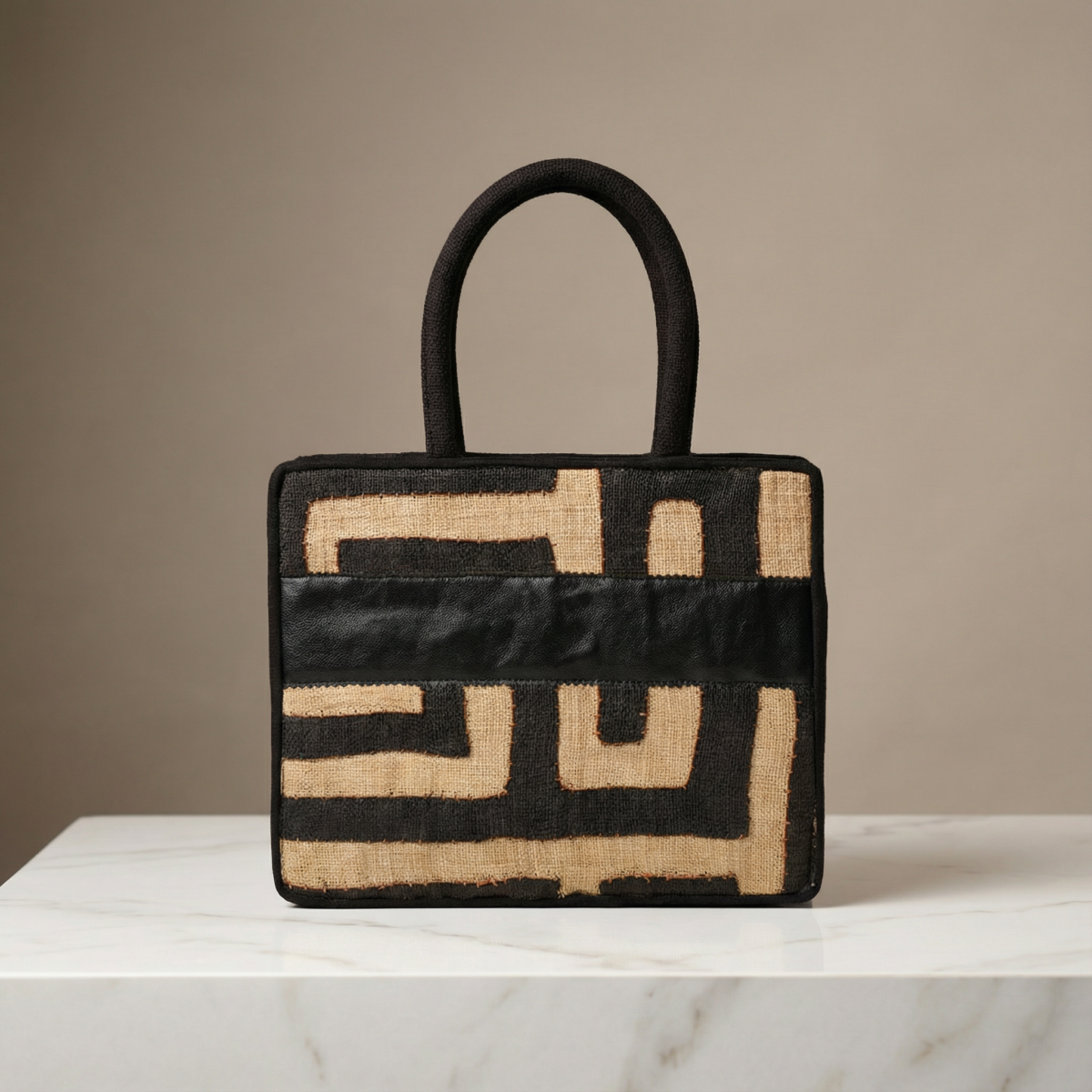
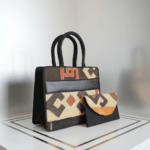
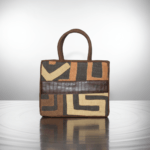
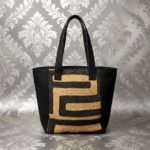
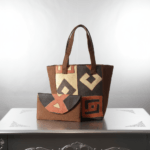
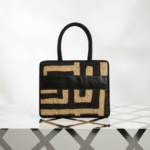
Kuba textile forms the primary surface of this structured handbag, defined by bold linear geometry in natural raffia and deep black contrast. The woven textile panel is framed by black leather trim, reinforced top handles, and a stabilizing horizontal leather band across the center.
Originating from the Kuba Kingdom of the Democratic Republic of Congo, Kuba cloth is handwoven from raffia fibers and developed through layered surface construction techniques. Its graphic compositions reflect structured pattern systems historically associated with ceremonial and domestic textile use.
MPENZII bags are shaped through structured hand assembly and disciplined material integration, uniting Kuba textile, raffia weave, and leather reinforcement. Hand construction introduces natural variation and structural nuance that differ from standardized industrial production, while maintaining proportion and enduring functional clarity.
PRODUCT DETAILS
Material: Handwoven Kuba textile; leather trim and handles
Construction Method: Hand-constructed and assembled
Construction: Structured textile body with reinforced leather framing
Interior: Open interior
Strap / Handle: Double leather top handles
Dimensions: Compact structured handbag silhouette
Closure: Open top with full-length zipper closure
Weight: Moderate
Category: Handbag
Origin: Kuba textile handwoven in the Democratic Republic of Congo; assembled and distributed from Canada.
This structured Kuba textile handbag combines handwoven Congolese raffia with reinforced leather framing in a compact architectural carry format.
Dimensions:
Width: 34 cm
Height: 28cm
Depth: 15 cm
Handle Drop: 17 cm
WEAR & CARE
Care is part of preservation.
Each MPENZII bag is constructed from natural textiles and structured leather elements. Subtle variations in tone, weave, and surface are inherent to the materials and should be preserved.
To maintain its integrity over time:
- Store in the provided dust bag when not in use
- Avoid prolonged exposure to moisture, oils, and direct sunlight
- Keep away from abrasive surfaces to protect textile fibres
- Do not overfill, as structure is intentionally maintained through balanced form
- Clean gently with a soft, dry cloth; avoid harsh cleaning agents
With considered care, the materials will retain their depth, structure, and presence over time.
Reviews
There are no reviews yet.